Key Takeaways
- Saturated Soil Weakens Stability: Waterlogged ground reduces the support trees rely on to remain upright.
- Roots Need Oxygen: Excess moisture limits oxygen around roots, reducing their strength and function.
- Failure Starts Below Ground: Wet soil often causes trees to uproot instead of simply breaking.
- Watch for Warning Signs: Leaning trees, lifted soil, and exposed roots indicate possible instability.
- Storm Risks Increase: Wind becomes more dangerous when heavy rain has already weakened the root zone.
- Professional Help Matters: Tree-B-Gone provides safe inspections and emergency tree services after storm damage.
Heavy rain does more than create puddles and muddy yards; it can significantly change the way trees respond to stress. A tree that appears healthy and stable before a storm may become vulnerable afterward because the soil supporting its root system has changed.
Trees depend on strong, stable soil to keep their roots anchored. When heavy rainfall saturates the ground, water fills the spaces between soil particles and reduces the soil’s ability to hold roots firmly in place. This creates a hidden risk because the problem often begins underground before any visible warning signs appear above ground.
For homeowners in Evansville and throughout Southwest Indiana, understanding how saturated soil affects tree stability is important. Seasonal storms, heavy rainfall, and periods of wet weather can increase the chance of tree failure, especially when combined with strong winds. Knowing what to look for after a storm can help prevent property damage and dangerous situations.
What Happens When Soil Becomes Saturated?
Healthy soil contains a balance of minerals, water, and air. Tree roots require oxygen from the soil to function properly, absorb nutrients, and maintain strength. During periods of heavy rain, water can fill the air spaces in the soil and create waterlogged conditions.
When this happens, two major problems develop:
- The soil becomes weaker and provides less support for the root system.
- Roots become stressed because they have limited access to oxygen.
A tree may still appear normal for a short time, but the foundation holding it upright may already be compromised. This is why some trees fail suddenly after storms even though there were no obvious signs of trouble beforehand.
Why Tree Roots Are the First Area Affected
The root system is responsible for anchoring the tree and supplying water and nutrients. When soil remains saturated for extended periods, roots struggle to function properly. Oxygen deficiency can weaken root health over time, making it harder for the tree to maintain stability. In some cases, the damage develops slowly. In others, a single storm with heavy rainfall and strong winds can create enough movement for a tree to become hazardous. Because root problems occur below the surface, homeowners may not notice an issue until the tree begins leaning, soil begins shifting, or failure occurs.
How Tree Failure Changes in Wet Soil
The way a tree fails depends heavily on soil conditions. In dry, stable ground, a weakened tree may experience branch breakage or trunk failure. However, when the soil becomes saturated, the failure point often shifts to the root system.
Instead of snapping, the tree may:
- Lean suddenly
- Rotate at the base
- Pull away from the soil
- Uproot completely
In these situations, the tree itself may not be the weakest point the surrounding soil is. Once the root plate loses stability, even a healthy-looking tree can become dangerous.
Why Wind Creates a Greater Risk After Heavy Rain
Heavy rain alone does not always cause immediate tree failure. The greater danger often comes when saturated soil combines with strong winds. Wind places pressure on the tree canopy, creating movement throughout the trunk and root system.
Under normal conditions, strong roots and stable soil help the tree resist that force. However, when the ground has softened, the roots may not have enough support to counteract wind pressure. This is why many trees fail during storms or shortly afterward. Rain weakens the foundation, and wind provides the force needed to push the tree beyond its limits.
Warning Signs of Soil-Related Tree Instability
After heavy rain, homeowners should inspect trees for signs that the root system may have shifted. Some of the most common warning signs include:
- A New Lean
A tree that suddenly begins leaning after rainfall may have experienced root movement or soil instability. A new lean is especially concerning if it was not present before the storm.
- Soil Heaving or Lifting
Raised soil around the base of a tree often indicates that the root plate has shifted. This movement suggests that the roots are no longer holding the tree securely.
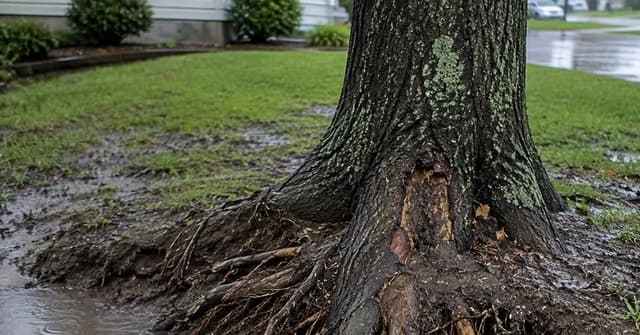
- Exposed Roots
Roots that become visible after rainfall may indicate soil erosion or movement. Exposed roots can reduce stability and leave the tree more vulnerable to future storms.
- Cracked Ground Near the Trunk
Cracks or gaps in the soil around the tree base may signal that the ground has separated as the root system moved.
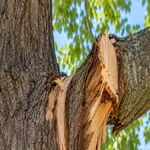
- Broken or Hanging Branches
While branch damage is common after storms, it can also indicate that the tree experienced significant stress from unstable roots.
Why Some Trees Are More Vulnerable
Not all trees respond to saturated soil the same way. Certain conditions increase the risk of failure, including:
- Shallow root systems
- Poor drainage
- Compacted soil
- Previous root damage
- Disease or decay
- Trees growing in low-lying areas
Older trees and trees located near construction areas may also have weakened root systems. When heavy rain softens the surrounding soil, these existing issues can make failure more likely.
How the Root Plate Affects Tree Stability
The root plate is the area where the tree’s major structural roots spread through the soil. This section acts as the tree’s foundation. When saturated soil causes the root plate to shift, the tree may begin moving even if the trunk and branches appear healthy. A shifted root plate is a serious warning sign because it means the tree has lost part of its natural support system. Once movement occurs, future storms can increase the damage and make failure more likely.
Why Tree Problems Can Appear Days After Rain
Many homeowners assume that once the storm passes, the danger has passed as well. However, saturated soil can remain unstable for days depending on rainfall amounts, soil type, and drainage conditions. A tree may remain standing immediately after heavy rain but become increasingly unstable as weakened roots continue to lose their ability to hold the tree in place. This delayed failure is one reason post-storm inspections are important, especially for large trees near homes, driveways, sidewalks, or utility lines.
The Importance of Proper Drainage
Drainage plays a major role in tree stability. Areas with heavy clay soil, poor grading, or low elevation may hold water longer and increase stress on tree roots. Improving drainage around trees can help reduce long-term problems. However, drainage issues should be evaluated carefully because removing too much soil or disturbing roots can create additional damage.
How to Check Your Trees After Heavy Rain
After a major storm, homeowners should carefully inspect trees from a safe distance. Look for:
- New leaning
- Soil movement around the base
- Exposed roots
- Cracked ground
- Hanging branches
- Broken limbs
- Changes in canopy appearance
Avoid approaching trees that appear unstable, especially during windy conditions. A tree that has shifted may fail without warning.
Why This Matters in Evansville and Southwest Indiana
Evansville and surrounding Southwest Indiana communities experience weather conditions that can increase tree stress. Heavy rainfall, thunderstorms, humid summers, and strong winds create repeated challenges for tree health and stability. A tree that appears safe during dry conditions may become hazardous after several inches of rainfall. Homeowners should pay close attention to changes that occur after storms and address warning signs early.A professional evaluation can determine whether the tree can be monitored, supported, pruned, or requires removal. The right solution depends on the extent of movement, root condition, tree health, and nearby risks. Taking action early can help prevent emergency situations and protect your home, family, and landscape.
When heavy rain leaves trees unstable, Tree-B-Gone helps Evansville homeowners respond safely and quickly. Our team provides storm damage cleanup, tree removal, tree trimming & pruning, tree inspections, and 24/7 emergency services throughout Southwest Indiana. Tree-B-Gone uses specialized equipment, including bucket trucks and advanced rigging systems, to safely handle hazardous trees near homes, fences, driveways, and utility areas. Our licensed and insured crews focus on protecting both people and property while providing reliable solutions. Whether a tree has started leaning, lost major limbs, or shows signs of root instability after heavy rainfall, Tree-B-Gone can evaluate the situation and recommend the safest next step. Call our team at – (812) 714-1217 to Book Your Free Estimate !!
Frequently Asked Questions About Soil Saturation in Evansville, IN
Why do trees fail after heavy rain in Evansville, IN?
Trees may fail after heavy rain because saturated soil loses strength, reducing the ability of roots to anchor the tree securely.
Is a tree leaning after rain dangerous?
Yes. A new lean often indicates root movement or soil instability and should be inspected by a professional.
Can a tree recover after soil saturation in Evansville, IN?
Some trees may recover if the damage is minor and soil conditions improve. However, trees with significant root movement may remain unsafe.
Should I remove damaged branches after a storm?
Only if it can be done safely. Trees affected by saturated soil may have hidden instability, making cleanup dangerous without professional equipment.
Summary Checklist: Soil Saturation and Tree Stability
| Condition | Risk Level | Recommended Action |
| Soil Heaving or Lifting | Critical | Root plate has shifted; call for emergency assessment immediately |
| Sudden New Lean | Critical | Roots are losing grip in wet soil; seek immediate inspection |
| Cracked Ground Near Trunk | High | Ground is separating from root movement; schedule inspection right away |
| Exposed Roots / Erosion | High | Structural support is compromised; have an arborist assess safety |
| Broken or Hanging Branches | Moderate | Tree experienced heavy storm stress; check canopy and root stability |
Final Advice
Heavy rainfall doesn’t just affect what you can see above ground, it also changes the stability of the soil that supports every tree on your property. Even healthy trees can become vulnerable when saturated soil weakens root anchorage and reduces the tree’s ability to withstand wind and additional storms. After periods of prolonged rainfall, take time to inspect larger trees for warning signs such as new leaning, soil heaving, exposed roots, or cracks in the ground around the trunk. These changes often indicate movement below the surface that should not be ignored. Keep people and vehicles away from any tree showing signs of instability until it can be evaluated.
A professional assessment can determine whether the tree remains stable, requires corrective care, or poses a safety risk. For homeowners in Evansville and Southwest Indiana, recognizing the effects of soil saturation early is one of the best ways to prevent property damage, protect your landscape, and reduce the risk of unexpected tree failure after severe weather. To learn about how Tree B Gone can assist you.