Trees in Evansville and Newburgh face a specific combination of pressures: heavy clay soil, humid summers, Ohio Valley storms, and an established emerald ash borer population that has already reshaped local tree cover. Tree care tips that work elsewhere in the Midwest don’t always apply here. This guide covers ten practices, based on local climate, soil, and pest conditions, that keep trees healthier and reduce the odds of storm damage or costly removal.
Key Takeaways
- Evansville and Newburgh sit in USDA Zone 7a; choose tree species rated for this zone and for heavier, wetter soils.
- Water deeply once a week rather than lightly every day.
- Keep mulch off the trunk and two to three inches deep out to the drip line.
- Prune during late winter dormancy on a regular schedule, not only after storm damage.
- Inspect trees every spring for storm risk before the severe weather season arrives.
- Emerald ash borer has reached Vanderburgh and Warrick counties; monitor ash trees and treat early if you want to keep them.
- Compacted clay soil on newer lots benefits from aeration or vertical mulching.
- Large cavities, a majority canopy dieback, or a worsening lean usually mean removal, not pruning.
Quick Answer
The most important tree care habits for Evansville and Newburgh homeowners are: plant species suited to USDA Zone 7a, water deeply once a week instead of daily, mulch two to three inches deep without piling it on the trunk, prune during late winter dormancy, and inspect trees each spring for storm risk and emerald ash borer damage.
1. Know Your Zone Before You Plant
Evansville and Newburgh sit in USDA Hardiness Zone 7a, one of the warmest zones in Indiana due to the moderating effect of the Ohio River. That means a longer growing season and more plant options than most of the state, but it also means some trees marketed broadly for “Midwest yards” aren’t actually a strong fit here.
Species that consistently perform well in this area include red maple, swamp white oak, bald cypress, tulip poplar, and river birch. These tolerate heat, humidity, and heavier soils better than trees bred for cooler, drier climates. Before buying a tree, confirm it’s rated for zone 7a and can handle occasional standing water, since low-lying yards near the river deal with wet soil after storms.
| Tree Species | Why It Works Here | Watch Out For |
| Red Maple | Fast growth, tolerates wet soil | Shallow roots near foundations |
| Swamp White Oak | Handles clay and moisture well | Slow to establish in the first 2 years |
| Bald Cypress | Thrives in wet, low areas | Needs space; grows large |
| Tulip Poplar | Fast shade, strong in Zone 7a | Weak wood in ice storms |
| River Birch | Disease-resistant, attractive bark | Prefers consistent moisture |
2. Water Deeply, Not Often
Evansville summers bring stretches of high heat with little rain, followed by sudden downpours. That pattern leads a lot of homeowners to either overwater or underwater without realizing it.
A slow, deep soak once a week during dry spells does far more good than a quick daily sprinkle. Deep watering trains roots to grow downward, where they’re more stable and better insulated from heat. A soaker hose left running near the base of a young tree for 30 to 45 minutes builds a stronger root system than frequent light watering, which encourages shallow roots that struggle in drought and are more prone to blowing over in storms.
3. Mulch Correctly and Keep It Off the Trunk
Mulch holds moisture, regulates soil temperature, and reduces the mower and trimmer damage that shows up constantly on young trees. But mulch piled against the trunk, often called a mulch volcano, traps moisture against the bark and invites rot and pests.
Spread mulch two to three inches deep in a flat ring out to the tree’s drip line, and pull it back a few inches from the trunk itself. Local clay soils benefit from this practice even more than sandier soils, since mulch helps break up compaction over time as it breaks down.
4. Prune on a Schedule, Not Just After Damage
Most homeowners only think about pruning after a storm breaks a limb. By then, the tree is being managed for damage instead of being protected from it.
Late winter, while trees are dormant and before spring growth starts, is the best window for structural pruning in this region. Branch structure is easier to see without leaves, and cuts made during dormancy heal faster with less stress on the tree. Removing crossing branches, weak V-shaped unions, and deadwood now reduces the number of limbs that come down in the first hard storm of spring.
5. Prepare Trees Before Storm Season, Not During It
The Ohio Valley sees a real mix of severe weather: spring thunderstorms with straight-line winds, occasional tornado warnings, and summer storms that can topple trees with saturated root systems. Trees with codominant stems, including bark, or a heavy lean toward the house, are the ones most likely to fail in these events.
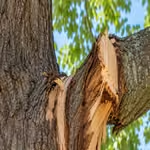
A pre-storm-season inspection, ideally each spring, is one of the most effective things a homeowner can do. Look for cracks in major limbs, mushrooms or fungal growth at the base (a sign of root decay), and branches hanging over the roofline. Catching these issues in April is far cheaper and safer than dealing with a downed tree on the house in June.
6. Watch for Emerald Ash Borer and Other Regional Pests
Emerald ash borer has been confirmed across Indiana, including Vanderburgh and Warrick counties, and it will eventually kill any untreated ash tree. If you have an ash tree, thinning canopy, D-shaped exit holes in the bark, and increased woodpecker activity are the earliest visible warning signs. Once symptoms are obvious, the tree is often already in serious decline.
Insecticide treatment can protect a healthy ash tree indefinitely if it’s started before canopy loss passes about 30 percent, but the same treatment usually isn’t worth the cost once decline has gone further than that. Beyond ash borer, keep an eye on bagworms on evergreens and scale insects on maples and oaks, both common problems in Southwest Indiana landscapes. Early treatment works far better than late treatment for nearly all of these pests.
7. Address Soil Compaction, Especially on Newer Construction Lots
Newer subdivisions in Newburgh and parts of Evansville often sit on soil that was heavily compacted during construction. Compacted clay soil holds water at the surface but starves roots of oxygen, which slows growth and weakens trees over time even when they look fine above ground.
Vertical mulching or core aeration around the root zone can relieve compaction without disturbing the roots themselves. This is worth doing especially for trees planted within the last five years on a lot that was recently graded or built on.
8. Give Young Trees Room to Establish Before Heavy Pruning
It’s tempting to shape a newly planted tree right away, but young trees need their lower branches and full leaf canopy for the first two to three years to build energy reserves and a strong root system. Removing too much too soon slows establishment and can leave the tree more vulnerable to sunscald and pest pressure.
Limit early pruning to removing damaged, dead, or crossing branches. Save structural shaping for once the tree has a season or two of solid growth behind it.
9. Protect Trees During Winter Ice Events
Evansville doesn’t get heavy ice every year, but when it does, the added weight can snap limbs on trees with weak branch unions or overextended canopies. Trees with multiple trunks growing from a single point, a structure common in silver maples and Bradford pears, are especially prone to splitting under ice load.
If ice accumulates, resist the urge to shake or knock it off branches, since this often causes more breakage than the ice itself. Wait for a natural thaw and assess damage afterward. Structural pruning the following late winter can correct weak unions before the next ice event.
10. Know When a Tree Needs Removal, Not Just Trimming
Not every problem tree can be saved, and knowing the difference matters for safety. A tree is generally a removal candidate, not a pruning candidate, if it has a large cavity in the trunk, dead wood across more than half of the canopy, significant root damage from construction or grade changes, or a lean that has visibly worsened.
Trees close to a home, driveway, or power line carry more risk when these signs appear, since a failure has somewhere serious to fall. When in doubt, a proper risk assessment beats guessing.
What We Commonly See in the Field
A few patterns show up repeatedly on properties around Evansville and Newburgh. Silver maples planted decades ago as fast-growing shade trees are now reaching the age where weak wood and shallow roots start causing real problems, especially after wind events. On newer builds, trees are regularly found planted too deep, with the root flare buried under mulch or soil, which slowly suffocates the tree over several years without obvious symptoms until decline sets in. And after almost every significant storm, homeowners who topped a tree years earlier end up dealing with a canopy of weakly attached regrowth that’s far more storm-prone than the tree’s original branch structure ever was.
Frequently Asked Questions
How often should trees be inspected in Evansville and Newburgh?
Once a year is a reasonable minimum for most healthy trees, ideally in early spring before storm season. Older trees, trees near structures, or trees that have shown prior damage benefit from a check twice a year.
What’s the best time of year to plant a tree in this area?
Fall, roughly October through early December, is generally the best window here. Cooler air temperatures reduce stress on the tree while the soil stays warm enough for root growth to continue before winter dormancy.
Do I need a permit to remove a tree in Evansville or Newburgh?
Requirements vary depending on the property and whether the tree sits in a right-of-way or protected area. Check with your local municipality before removing a large tree, particularly one near a street or property line.
Why do my trees keep dropping branches even without storms?
This usually points to deadwood buildup, pest activity, or root stress from compacted soil, all common in this region. A branch drop without wind is typically a sign something deeper needs attention.
Are emerald ash borer treatments worth it for a healthy ash tree?
For ash trees that are still structurally sound with minimal canopy loss, preventive treatment can be effective and is often cheaper than removal and replacement. Once canopy loss exceeds roughly 30 percent, treatment is much less likely to save the tree.
How can I tell if a tree is a storm risk before it fails?
Look for cracks, significant lean, exposed roots, cavities, and deadwood in the upper canopy. None of these guarantee failure on their own, but any of them warrant a closer look from someone who can assess the tree’s structure.
What trees grow best in Evansville’s clay soil?
Swamp white oak, red maple, bald cypress, and river birch all tolerate heavier, slower-draining clay soil better than species bred for sandy or well-drained conditions.
How much should I water a newly planted tree?
A newly planted tree typically needs about 10 to 15 gallons of water per week during its first growing season, applied slowly so it soaks into the root zone instead of running off.
Is topping a tree ever a good idea?
No. Topping removes large portions of the canopy and forces weak, fast-growing regrowth that attaches poorly and is more likely to fail in future storms.
What does a mulch volcano do to a tree?
Piling mulch against the trunk traps moisture against the bark, which encourages rot, invites pests, and can eventually girdle the tree’s root flare.
Can I treat emerald ash borer myself, or do I need a professional?
Homeowner-grade treatments exist for smaller ash trees, but larger trees generally need a professional application to reach effective coverage. A professional assessment first will tell you whether treatment is still a good investment for that specific tree.
How do I know if a tree is too close to my house?
As a general guideline, a mature tree’s canopy spread should not extend directly over the roofline, and root systems close enough to affect a foundation typically need evaluation by an arborist before any major decision is made.
Proactive Tree Care in Evansville and Newburgh
Tree care in Evansville and Newburgh comes down to working with the local conditions instead of against them: Zone 7a heat and humidity, heavy clay soil, Ohio Valley storms, and an emerald ash borer population that isn’t going away. The homeowners who avoid expensive storm damage and premature tree loss are usually the ones doing a few simple things consistently: deep watering, correct mulching, dormant-season pruning, and a spring inspection before severe weather arrives.
Tree-B-Gone works with homeowners across Evansville and Newburgh on tree health assessments, storm damage prevention, and removals when a tree’s risk outweighs what pruning can fix. If any of the warning signs above sound familiar, it’s worth having a look before storm season, not after.