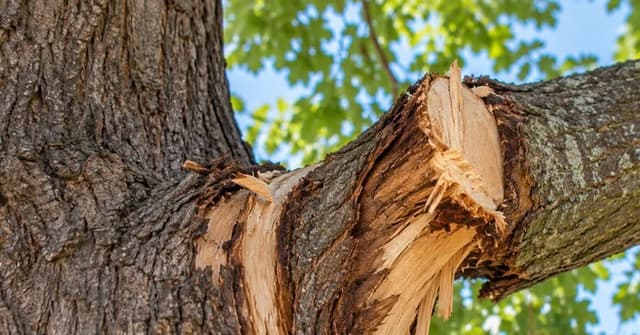
Cutting a large branch incorrectly can leave a tree with torn bark, an oversized wound, structural weakness, or developing decay. The consequences may not appear immediately, but the damage can affect the tree for years.
Large limbs require more planning than small branches because their weight creates considerable force during removal. Once a heavy limb begins falling, it can split unexpectedly, peel bark from the trunk, or strike nearby property. Incorrect cuts can also remove tissues the tree needs to contain the injury.
At Tree-B-Gone, we evaluate the branch, trunk connection, surrounding canopy, and nearby hazards before recommending work. Our professional tree trimming and pruning services are designed to protect tree structure while addressing unsafe, damaged, or overgrown limbs.
Why Large Branches Require Special Care
Large branches can cause serious tree damage if their weight is not controlled before the final cut. A heavy limb may drop suddenly and tear bark and wood from the trunk, creating a much larger wound than the intended pruning cut. University of Minnesota Extension recommends using multiple cuts when removing large branches to help prevent bark tearing. how to remove large tree branches without tearing the bark.
This type of tearing creates a larger injury and can expose internal wood to moisture and decay organisms. If the tear extends into the trunk, it can also damage tissues involved in the tree’s natural defense system.
Large branches also affect a tree’s balance. Removing one without considering the rest of the canopy can change the distribution of weight and alter how the remaining branches respond to wind. For that reason, large-limb pruning should consider the structure and condition of the entire tree, not just the individual branch being removed.
Trees Compartmentalize Wounds Instead of Healing Like Skin
Trees do not heal pruning wounds in the same way human skin heals. Instead, they compartmentalize injured wood by establishing boundaries that help limit the spread of decay and pathogens. This concept is documented extensively in USDA Forest Service research on tree defense and compartmentalization. how trees compartmentalize pruning wounds.
A properly placed pruning cut gives the tree a better opportunity to isolate the injury. The branch collar and branch protection zone play an important role in this process. New callus and woundwood can gradually develop around the wound, while the original damaged wood remains inside the tree. Penn State Extension explains that preserving the branch collar supports wound closure and compartmentalization. how to prune large tree branches without damaging the branch collar.
A poor cut can interfere with this natural defense system. For example, a flush cut can remove part of the branch collar and branch protection zone, potentially creating a larger wound and increasing the amount of stem tissue exposed to decay.
Not every incorrect cut kills a tree. The outcome depends on factors such as tree species, health, age, wound size, growth rate, environmental conditions, and the location of the damage. Research from the USDA Forest Service also shows that wound closure rates can vary with tree growth and branch characteristics.
Bark Tearing Can Turn One Cut Into a Major Injury
An unsupported branch can tear bark down the trunk as it falls. The heavier the limb, the more force it can place on the remaining wood and bark fibers.
A torn area may extend well below the branch attachment. This exposes more internal wood than a controlled cut would and can disrupt the movement of water and nutrients beneath the bark. Severe tears may also weaken the trunk at an important structural point.
Signs of a branch-removal tear include:
- A long strip of missing or loosened bark below the cut
- Splintered wood extending into the trunk
- A wound much larger than the original branch diameter
- Cracks spreading from the branch attachment
- Hanging bark or partially detached wood
Large limbs over houses, fences, vehicles, or landscaped areas create additional hazards during removal. Our tree cutting services account for branch weight, landing space, equipment access, and nearby structures before work begins.
Flush Cuts Damage the Branch Collar
A flush cut removes a branch too close to the trunk and often cuts through the branch collar. This collar contains specialized tissue that helps the tree form protective boundaries after pruning.
The branch collar usually appears as a slightly raised or swollen area where a limb connects to the trunk. Cutting into that area makes the wound larger and removes tissue involved in compartmentalization. A flush cut may look neat initially, but its smooth appearance does not mean it is healthier for the tree.
Flush cuts can cause several problems:
- A larger exposed surface than necessary
- Slower formation of woundwood around the cut
- Greater injury to trunk tissue
- Increased potential for internal discoloration or decay
- Reduced structural integrity near the branch union
The effect varies among trees. A healthy young tree may contain the damage better than an older, stressed, or declining tree, but unnecessary collar damage always creates an additional challenge.
Long Branch Stubs Also Create Problems
Leaving a long stub places the cut too far from the branch collar. The remaining wood may die because it no longer has enough foliage to support it.
A dead stub can dry, crack, and decay before the tree can grow tissue over the wound. Because the cut is far from the branch collar, closure may be slow or incomplete. Decay can then progress through the stub toward the supporting limb or trunk.
A short remaining section is not automatically a harmful stub. Proper cut placement depends on the branch collar, branch bark ridge, species, and shape of the union. The goal is to preserve protective tissue without leaving unnecessary dead wood.
Removing Too Much Canopy Can Stress the Entire Tree
Excessive branch removal reduces the leaf area a tree uses to produce energy. If too much live canopy disappears at once, the tree may struggle to support its roots, defend against pests, and respond to the new wounds.
Over-pruning may also expose previously shaded bark to intense sunlight. Some trees can develop bark injury after sudden exposure, especially when large portions of the canopy are removed. A heavily thinned crown may also respond differently to wind because its structure and weight distribution have changed.
Possible signs of excessive canopy removal include:
- Sparse foliage during the growing season
- Numerous fast-growing shoots near cuts
- Dieback in remaining branches
- Reduced annual growth
- Early leaf color or leaf drop
- Increased exposure of major limbs and trunk tissue
Appropriate pruning should have a defined purpose. Removing a hazardous limb, improving clearance, or correcting a structural defect requires a different approach than broadly reducing the canopy.
Topping Produces Weak, Fast-Growing Regrowth
Topping removes large branches without regard for natural branch unions or healthy crown structure. It leaves major wounds and often triggers clusters of vigorous shoots near the cuts.
These new shoots may grow quickly, but rapid growth does not mean the tree has regained its original strength. Many sprouts develop from tissue near the surface rather than from a strong, naturally formed branch attachment. As the shoots gain height and weight, they can become more likely to break.
Topping can also create a repeating maintenance problem. Weak shoots require future attention, while the original wounds may continue developing internal decay. The tree can become taller, denser, and hazardous again despite the severe initial cutting.
Our approach to pruning considers long-term structure rather than relying on topping as a shortcut. When a tree cannot safely remain at its current size or location, removal may be more responsible than repeated severe cutting.
Cut Location and Angle Affect the Result
Cut placement matters because it determines which tissues remain and how large the wound becomes. The ideal location is generally just outside the branch collar, without cutting into the trunk or leaving an excessive stub.
Cut angle should follow the natural structure of the branch attachment rather than create an artificially flat surface against the trunk. Every union is different, so a single visual rule cannot replace an on-site evaluation.
Large-limb work also involves controlling weight before separation. Professionals may use rigging, ropes, lifts, or other equipment to prevent an uncontrolled fall. These methods require training because a heavy branch can move, swing, split, or release stored tension unexpectedly.
Warning Signs Around an Old Pruning Wound
An old cut may need professional inspection when it shows decay, cracking, loose bark, cavities, or unusual growth. Changes around the wound can reveal that the tree is struggling to contain the original injury.
Watch for:
- Soft, crumbling, or discolored wood
- Mushrooms or other fungal growth near the wound
- Cracks extending into the trunk or supporting limb
- A hollow opening or deep cavity
- Bark separating around the cut
- Dead branches above or near the wound
- Water collecting inside the damaged area
- New shoots growing densely around an old topping cut
Woundwood developing around the edge is usually part of the tree’s response. However, an opening that remains exposed does not reveal how far internal decay has progressed. A tree may retain green leaves while losing strength within the trunk or a major union.
If you are uncertain about an injured tree, our guide explaining whether a damaged tree can be saved outlines factors that influence preservation decisions.
Can a Tree Recover From an Incorrect Cut?
A tree may recover from a poor branch cut if it has enough healthy tissue, sound structure, and energy reserves. Recovery becomes less likely when the wound is very large, decay is established, or the tree already has significant stress.
We consider several factors when evaluating the outlook:
- The tree’s species, age, and overall condition
- The size and location of the wound
- Whether the branch collar was removed
- The presence of cracks, cavities, or fungal growth
- The percentage of live canopy lost
- Root damage, soil compaction, drought stress, or other problems
- The tree’s distance from people, buildings, roads, and utilities
Corrective pruning may improve structure when enough healthy wood remains. In other cases, monitoring is more appropriate because additional cutting could enlarge the injury. Severe damage near the trunk or a major union may make professional tree removal the safer recommendation.
Should Pruning Paint Be Applied to a Bad Cut?
Pruning paint does not repair missing wood or restore a damaged branch collar. Most routine pruning wounds are left uncovered so the tree can begin its natural compartmentalization process.
Some coatings can trap moisture or conceal changes that should remain visible during monitoring. Special circumstances may justify a particular treatment, but a wound dressing should not be applied automatically. An experienced tree professional can evaluate the species, timing, and condition of the wound before recommending anything.
Do not try to reshape a large wound simply to make it look smoother. Additional cutting may remove healthy tissue and make the damage worse.
When Professional Assessment Is Necessary
Professional assessment is warranted when a large limb, trunk wound, or damaged branch union could affect people or property. The need becomes more urgent when the tree is leaning, actively cracking, dropping limbs, or showing movement around the root area.
Evansville and Southwest Indiana experience thunderstorms, high winds, heavy rain, and ice that can load weakened limbs. A defect that appears stable during calm weather may behave differently when the canopy is wet, frozen, or moving in strong wind.
Prompt help may be appropriate when:
- A large branch is hanging or partially detached
- Fresh cracks appear in the trunk or a major union
- A damaged limb extends over a home, driveway, road, or play area
- A storm has changed the tree’s lean or canopy balance
- Decay is visible around an old pruning wound
- Multiple weak shoots have developed from topping cuts
- Branches are contacting or threatening utility lines
Stay away from any branch or tree touching a utility line. Do not attempt to move it, cut it, or use a ladder nearby. Contact the utility provider or an appropriately qualified emergency service.
For urgent non-utility hazards, our emergency tree service can help evaluate storm-damaged and unstable trees. If the situation is not immediate, restrict access beneath the affected area until it can be inspected.
What We Evaluate Before Recommending Work
We evaluate the tree as a complete structure before deciding whether pruning, monitoring, or removal is appropriate. A large wound cannot be judged by appearance alone.
Our assessment may include the branch attachment, remaining canopy, trunk condition, surrounding targets, and evidence of internal deterioration. We also consider whether corrective work would meaningfully improve safety without causing another large injury.
The right recommendation may be limited pruning, staged management, observation, or complete removal. We explain what we find so you can make an informed decision based on the tree’s condition and location.
Tree-B-Gone provides tree services throughout Evansville and neighboring Southwest Indiana communities. You can review our service areas to learn whether our crews work in your location.
Frequently Asked Questions
Can a tree survive after a large branch is cut incorrectly?
Yes, many trees survive incorrect cuts, but survival does not guarantee that the wound is structurally harmless. The result depends on the cut’s size and location, the tree’s health, and whether decay or cracking develops.
A professional can determine whether corrective pruning is useful or whether the tree should be monitored. Cutting again without understanding the original injury may remove more healthy tissue.
What is a flush cut?
A flush cut removes a branch tight against the trunk and cuts through the branch collar. This produces a larger wound and damages tissue that helps the tree compartmentalize the injury.
Flush cuts sometimes look clean because no projection remains. Their appearance can be misleading, since the most important damage occurs in living tissue around the branch union.
Will a branch stub eventually heal?
A tree does not heal a stub like skin heals a cut. It may grow new tissue around the area while compartmentalizing damaged wood internally.
Long stubs often die and decay before woundwood can cover them. Whether corrective pruning is possible depends on the remaining branch collar, the stub’s condition, and the amount of decay present.
Should I apply pruning paint to a large branch cut?
Pruning paint is generally unnecessary for routine cuts and cannot undo poor cut placement. It may also conceal moisture, decay, or other changes around the wound.
Avoid applying a product automatically. Seek species-specific advice if the wound is unusually large, damaged, or associated with a known pest or disease concern.
How can I tell whether an old pruning wound is decaying?
Soft wood, fungal growth, cavities, cracking, loose bark, and expanding dead areas can indicate trouble. Dieback above the wound or repeated limb failure nearby also deserves attention.
Internal decay is not always visible from the ground. An assessment is especially important when the wound is near a major union or above an area frequently used by people.
When is a branch too large to remove myself?
A branch is too large for homeowner removal when its weight, height, tension, location, or fall path cannot be controlled safely. Branches over structures, roads, vehicles, fences, or occupied areas require particular caution.
Never work near electrical conductors or on a ladder while operating cutting equipment. Professional equipment and controlled rigging may be necessary even when the branch appears manageable from the ground.
Protect Your Evansville Trees From Lasting Pruning Damage
A large branch cut can influence a tree’s health and stability for years. If you are concerned about a fresh cut, an old wound, storm damage, or a heavy limb over your property, we can evaluate the situation and recommend an appropriate next step.
Contact Tree-B-Gone or call (812) 714-1217 to request an assessment in Evansville or Southwest Indiana. Our goal is to address the immediate concern while protecting the tree’s long-term structure whenever preservation remains safe and practical.