Key Takeaways
- A tree falling on your home is a safety event first and a property event secondchecking for injuries, gas leaks, and downed power lines comes before anything else.
- Never approach a fallen tree that’s touching a power line, even if the line looks dead, and never attempt to cut or move a tree that’s under tension against your house.
- Photograph everything before anything is moved, since thorough documentation makes the insurance claims process faster and smoother.
- A licensed, insured tree service should handle the removal of DIY chainsaw work on a tree leaning against a structure is one of the most dangerous jobs in tree care.
- Tree-B-Gone offers 24/7 emergency response across Evansville, Newburgh, and Southwest Indiana to stabilize the situation and get your property secured fast.
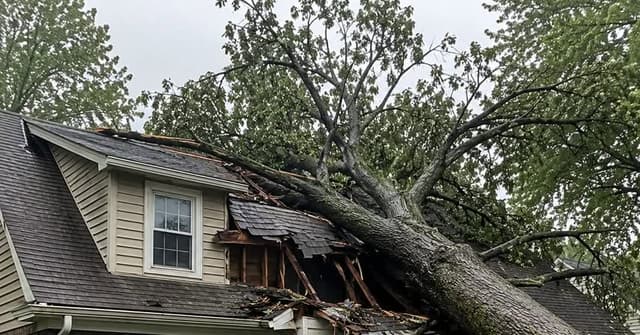
Evansville, Indiana sees its share of spring thunderstorms and high-wind events, and when one of those storms sends a tree crashing into a roof, a fence, or a car, the first hour matters more than most homeowners realize. What you do and don’t do in that window can affect everyone’s safety, how smoothly your insurance claim goes, and how much additional damage happens before help arrives.
Here’s a clear, step-by-step guide for exactly what to do when a tree falls on your Evansville home.
Step 1: Check for Injuries and Get Everyone to Safety
Before you look at the damage, look at the people. Make sure everyone inside the home is accounted for and uninjured.
- If the tree has broken through a roof, wall, or window, treat the affected area as unstable and keep everyone including pets out of that part of the house until it’s been inspected.
- If anyone is hurt, call 911 immediately. Structural damage from a falling tree can compromise ceilings, ductwork, and wiring in ways that aren’t obvious from a quick look, so it’s safer to evacuate the impacted rooms rather than assume they’re fine.
Step 2: Watch for Power Lines and Gas Leaks
This is the step that saves lives. If any part of the fallen tree is touching a power line, or if you’re not sure whether it is, stay far away and assume the line is live, even if it’s sparking, smoking, or appears dead.
- Downed lines can re-energize without warning. Call your utility provider or 911 to report it, and don’t attempt to move branches near the line yourself.
- At the same time, check for the smell of gas, which can indicate a ruptured line if the tree impacted a meter, an exterior wall, or underground piping.
- If you smell gas, leave the property immediately and call the gas company or 911 from a safe distance.
- Don’t turn on lights, use a phone inside the house, or do anything that could create a spark.
Step 3: Document the Damage Before Anything Moves
Once everyone is safe, take photos and video of the tree, the damage to your home, and the surrounding area from multiple angles.
- Capture the whole scene, not just close-upsinsurance adjusters want to see how the tree fell, what it hit, and the full extent of the damage.
- If it’s safe to do so, note the time the tree fell and any relevant details, like whether it happened during a storm, high winds, or without any obvious trigger (which can matter for claims involving tree health versus storm damage).
- Try not to move debris, cut branches, or start cleanup before this documentation is complete.
- Insurance companies rely heavily on original-condition photos, and moving things prematurely can complicate a claim.
Step 4: Contact Your Homeowners Insurance
Call your insurance company as soon as you’ve secured the scene and documented the damage.
- Most homeowners policies cover tree removal and structural repair when a tree falls on a covered structure, though coverage details vary by policy and by whether the tree was healthy or already known to be hazardous.
- Ask your adjuster whether they need photos before removal begins, whether they require an itemized estimate from a licensed contractor, and what your policy covers for temporary repairs like tarping a roof to prevent further water damage.
Step 5: Prevent Further DamageTemporarily
- If a hole has opened in your roof or a window has broken, covering the exposed area with a tarp can prevent rain from causing secondary water damage while you wait for repairs. This is often called “mitigation,” and most insurance policies expect homeowners to take reasonable steps to prevent additional damage.
- Don’t get on a damaged roof yourself, and don’t attempt tarping around a tree that’s still resting on the structure. That’s a job for professionals who understand how much weight the tree is putting on the roof and where it’s safe to walk.
Step 6: Call a Licensed, Insured Tree Service Not a Handyman with a Chainsaw
A tree resting against a house is under tension in ways that aren’t visible from the ground. Cutting into it in the wrong spot can cause it to shift suddenly, drop additional weight onto the structure, or spring back toward whoever’s holding the saw. This is genuinely one of the more dangerous scenarios in residential tree work, and it’s not a DIY project, even for homeowners who are comfortable with a chainsaw for yard cleanup.
Tree-B-Gone provides 24/7 emergency tree removal throughout Evansville, Newburgh, Henderson, Mt. Vernon, Poseyville, and surrounding communities in Vanderburgh, Warrick, and Posey Counties.When a tree falls on your home, our experienced crews quickly assess the situation and create a safe removal plan. Using professional rigging and bucket trucks when needed, we remove the tree section by section to protect your property. We clear debris, help coordinate temporary protection, and provide documentation to support your insurance claim.
Frequently Asked Questions About a Tree Falling on Your Home in Evansville, Indiana
Should I try to remove small branches myself while I wait for help?
Small, loose branches on the ground away from the main tree are usually fine to clear. Avoid touching anything that’s still connected to or resting against the tree itself, since removing one piece can shift the load on the rest.
Will my homeowners insurance cover the cost of tree removal in Evansville, IN?
In most cases, yes, if the tree fell on a covered structure like your house, garage, or fence, though exact coverage depends on your specific policy. It’s worth calling your insurer directly to confirm what’s included.
How fast can Tree-B-Gone respond to an emergency in Evansville, IN?
We maintain 24/7 emergency crews specifically for situations like this. Call (812) 714-1217 and we’ll walk you through next steps and dispatch as quickly as conditions allow.
Is it safe to stay in my house if a tree fell on part of it?
It depends on where the damage is and how significant it is. If the tree impacted a load-bearing area, the roof structure, or came anywhere near gas or electrical lines, it’s safest to avoid that part of the home until it’s been inspected by a professional.
What if the tree damaged my neighbor’s property too?
Document the damage on both properties if you can safely do so, and each homeowner should generally file with their own insurance company. Your tree service can provide separate documentation for each affected property if needed.
Summary Checklist: First Hours After a Tree Falls on Your Home
| Situation | What to Check | What to Do |
| Anyone injured | Physical safety of occupants | Call 911 immediately |
| Tree near power lines | Live electrical hazard | Stay away, call utility company or 911 |
| Smell of gas | Ruptured gas line | Evacuate the property, call from a safe distance |
| Roof or wall breach | Structural exposure to weather | Tarp temporarily if safe, avoid the area otherwise |
| Documentation | Photos and video of all damage | Capture before cleanup begins |
| Insurance | Coverage and next steps | Call your insurer and start the claim |
| Tree removal | Load and tension on the structure | Call a licensed, insured emergency tree service |
Final Advice
If a tree falls on your Evansville home, prioritize safety, stay away from power lines and unstable structures, and document the damage before cleanup begins. Contact your insurance provider promptly and avoid cutting or moving a tree that is resting against your home, as hidden tension can make removal extremely dangerous. Instead, rely on a licensed and insured emergency tree service to assess the situation and remove the tree safely. Tree-B-Gone provides 24/7 emergency tree removal throughout Evansville, Newburgh, and surrounding Southwest Indiana communities.
Reviewed by Licensed Arborist
This article has been reviewed by a licensed arborist to ensure accuracy on the information regarding fallen trees, emergency tree removal, structural hazards, storm damage, and safe tree-care practices.