Key Takeaways
- The amount of remaining healthy structure, not just how bad the damage looks, is what determines whether a tree can recover from trimming or needs to come down.
- A general rule of thumb: if less than 25 to 30 percent of the canopy was lost, most healthy trees can recover with proper pruning; beyond that, the odds start working against the tree.
- Location matters as much as biology; a moderately damaged tree next to a home carries more risk than the same damage on a tree in an open field.
- Cracks or splits in the main trunk, exposed heartwood decay, and a significantly compromised root system are the clearest signs that removal is the safer call.
- A professional assessment from an experienced arborist is the only reliable way to know which category your tree falls into, since guessing wrong in either direction has real consequences.
After a storm rolls through Evansville, Indiana most of the homeowners stand in their yard looking at a damaged tree and inquire: can this be saved, or does it need to come down? It’s a fair question, and the honest answer is that it depends on more than how bad the tree looks from the ground. Some trees that appear dramatically damaged bounce back fine with the right pruning. Others that look mostly intact are quietly compromised in ways that make them a serious hazard. Here’s how to actually think through that decision.
Start With How Much Canopy Is Gone
Trees rely on their leaves to produce the energy that keeps the whole system trunk, branches, and roots alive and functioning. When a storm strips away a significant portion of the canopy, the tree’s ability to recover depends heavily on how much is left to work with.
- As a general guideline, a tree that’s lost less than 25 to 30 percent of its canopy usually has enough remaining leaf surface to recover well with proper pruning to clean up the damage and encourage healthy regrowth.
- Once canopy loss climbs past that range, the tree has to work a lot harder to generate the energy it needs, and it becomes increasingly vulnerable to decay, pests, and secondary stress in the following seasons even if it technically survives the initial damage.
- A tree that’s lost more than half its canopy is often better off removed, both because its long-term prognosis is poor and because a severely thinned, unbalanced canopy is itself a structural liability going forward. This isn’t an exact science; a young, vigorous oak will bounce back from more damage than an older, already-stressed tree but canopy loss percentage is the first, most useful filter for figuring out which category a damaged tree falls into.
Look at Where the Damage Actually Is
Not all damage is created equal, even at the same severity level. A few locations matter more than others:
- Branch damage in the outer canopy is generally the easiest to address. Broken limbs out toward the edges can often be pruned back to a healthy branch collar, and the tree recovers without much long-term consequence.
- Damage closer to the trunk, a major limb torn away near where it meets the trunk, or a large wound on the trunk itself is more serious. These wounds are harder for the tree to seal over (a process called compartmentalization), and they create an entry point for decay fungi that can work into the trunk over years, quietly weakening the tree’s structural core long after the original damage seems to have healed on the surface.
- Damage to the root system is the hardest to evaluate and often the most dangerous, because it’s invisible. A tree that’s been pushed or shifted by wind, even slightly, may have torn or compromised roots on one side. That kind of damage doesn’t show up in the canopy at all, but it directly affects the tree’s ability to stay upright in the next storm.
Trunk Damage Is the Line That Usually Decides It
If there’s one factor that tends to separate “this can be pruned and saved” from “this needs to come down,” it’s the condition of the main trunk.
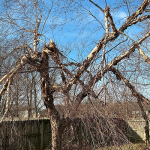
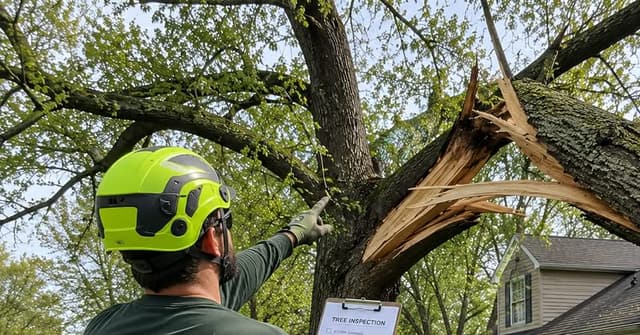
- A crack or split running into the trunk as opposed to damage contained within a branch is a serious structural red flag. The trunk is what holds the entire tree upright and transmits the load of wind pushing against the canopy down into the roots.
- A trunk that’s already cracked has lost a meaningful amount of that structural integrity, and there’s no pruning fix for a compromised trunk.
- Cabling can sometimes stabilize a tree with this kind of damage temporarily, but for most residential situations especially near a house, driveway, or anywhere people spend time a split or significantly cracked trunk points toward removal.
- Similarly, exposed decay in the trunk of soft, discolored, or crumbling wood, especially combined with fungal growth at the base, signals that the tree’s structural core has already been compromised, sometimes for years before the storm damage made it visible.
Factor In Location, Not Just Biology
Two trees with identical damage can call for two different decisions depending on where they’re standing. A moderately damaged oak in the back corner of a large lot, away from structures, can often be given the benefit of the doubt pruned, monitored, and reassessed over the following year or two. The same damage on a tree standing 15 feet from a bedroom window, over a driveway, or above a spot where kids play changes the math. The consequence of being wrong shifts dramatically based on what’s underneath the tree, and that’s a legitimate part of the decision, separate from the tree’s biological odds of recovery.
When Trimming Is the Right Call
Pruning tends to be the right choice when:
- canopy loss is moderate
- the damage is limited to branches rather than the trunk
- the tree is otherwise healthy and not showing signs of prior decline, and
- its location doesn’t put people or structures at serious risk even in a worst-case scenario.
Good post-storm pruning isn’t just cleanup it involves making proper cuts back to healthy branch collars (not leaving stubs, which invite decay), removing any hanging or broken limbs still caught in the canopy, and thinning out competing or crossing branches that could create new weak points as the tree regrows. Done well, this kind of structural pruning can actually leave a tree in better long-term shape than it was before the storm.
When Removal Is the Safer Choice
Removal becomes the more responsible option when –
- canopy loss is severe
- the trunk itself is cracked or shows internal decay
- the root system has been visibly disturbed, or
- tree already had underlying health problems before the storm hit
- tree in a high-consequence location where even a moderate risk of future failure isn’t worth living with.
- A tree that’s kept “just in case” it recovers, when the signs point the other way, is a bet made against your own home.
Why a Professional Evaluation Matters Here
The line between “prune it and move on” and “this needs to come down” isn’t always obvious from the ground, and it’s not a decision worth guessing on in either direction. Removing a tree that could have recovered is an unnecessary cost and a loss of a mature tree that took decades to grow. Leaving a structurally compromised tree standing because it still looks green is a real safety risk that tends to show up at the worst possible time during the next storm.
An experienced tree service firm in Evansville, Indiana like Tree-B-Gone evaluates storm-damaged trees for canopy loss, trunk damage, broken limbs, decay, and root disturbance. Our team also considers the tree’s location and potential risks to nearby homes, vehicles, and property. If trimming can restore safety, we recommend it over unnecessary removal. When damage is severe, we explain why removal may be the safest option.
Frequently Asked Questions About Damaged Trees in Evansville, Indiana
How long does it take to know if a pruned tree is recovering well?
Most trees show meaningful new growth within one growing season, but full recovery and structural reassessment is often better judged over one to two years.
Can a tree with root damage be saved?
Sometimes, if the damage is limited and the tree is otherwise healthy, root damage is difficult to assess without professional evaluation and tends to carry more risk than canopy damage alone.
Is it cheaper to trim a damaged tree or remove it?
Trimming is typically less expensive upfront, but a tree that’s trimmed instead of removed when it shouldn’t have been can lead to costlier problems including property damage down the line.
What if I’m not sure which category my tree falls into?
That’s exactly the situation a professional assessment is for. Tree-B-Gone offers free estimates specifically to help homeowners make this call with confidence.
Does a tree that survives storm damage need any follow-up care?
Yes, reduced watering stress, monitoring for pest or disease activity, and a follow-up structural check the following year are all good practices for a tree that’s recovering from significant damage.
Summary Checklist: Trim or Remove?
| Situation | What to Check | What to Do |
| Less than 25-30% canopy lost | Remaining healthy structure | Usually safe to prune and monitor |
| More than 50% canopy lost | Tree’s ability to recover | Lean toward removal |
| Damage limited to outer branches | Structural risk level | Prune back to healthy branch collar |
| Crack or split in the main trunk | Structural integrity | Schedule removal evaluation |
| Visible decay or fungal growth at base | Internal trunk condition | Have it inspected promptly |
| Tree near home, driveway, or play area | Consequence of failure | Weigh location into the decision |
Final Advice
Storm damage does not always mean a tree needs to be removed. The decision depends on how much healthy structure remains, where the damage occurred, and whether the tree can recover safely. Trees with limited canopy loss and minor branch damage may benefit from professional trimming, while cracked trunks, severe decay, major splits, or root damage may make removal the safer choice. Avoid cutting large or damaged limbs yourself, as improper pruning can create additional hazards. Tree-B-Gone provides professional evaluations and honest recommendations based on the tree’s condition, location, and recovery potential.
Reviewed by Licensed Arborist
This article has been reviewed by a licensed arborist to ensure the guidance on storm-damaged tree trimming, recovery, and removal reflects professional tree-care practices.