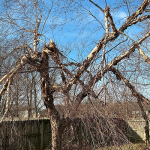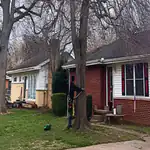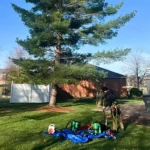

The most expensive tree damage to homes across the Tri-State area happens on properties where the warning signs had been visible for months or years. The homeowner walked past the tree daily, noticed nothing alarming, and was surprised when a major branch came down on the roof during a summer storm. In almost every case, the signs were there. They just were not recognized.
Key Takeaways
- Most catastrophic tree failures show warning signs in the months or years before the failure happens. Homeowners who learn to identify these signs can take action before damage occurs.
- The single highest-risk situation across the Tri-State area is an emerald ash borer-killed ash tree that has been dead for more than a year. These trees lose structural integrity fast and fail unpredictably.
- Visible warning signs fall into five main categories: canopy decline, trunk problems, branch and union issues, root and base concerns, and species-specific patterns.
- Southern Indiana, southwestern Kentucky, and southeastern Illinois share enough climate and species overlap that the warning signs apply consistently across the Tri-State region.
- A dangerous tree is rarely an immediate emergency. Most can be assessed and addressed during scheduled work, as long as the homeowner does not wait until failure occurs.
This guide walks through what to look for when assessing trees on your property, why certain warning signs matter more than others, and what to do when you spot a problem before it becomes an emergency.
What Are the Signs of a Dangerous Tree?
Common dangerous tree warning signs include dead branches, trunk cracks, fungal growth, canopy decline, root damage, sudden leaning, and weak branch unions. Trees showing multiple warning signs should be professionally inspected before severe weather increases the risk of failure.
The Five Categories of Dangerous Tree Warning Signs
A useful framework for evaluating tree hazards is to group warning signs into five categories. A single problem in one category is worth professional attention. Multiple problems across categories almost always mean the tree should be assessed for removal.
Canopy Decline
The first place trouble often shows up is the canopy:
- Dead branches in the upper canopy: Especially branches with no leaves, while the rest of the tree leafs out normally in spring
- Top-down dieback: Branches dying from the tip back toward the trunk, often a sign of root problems or systemic disease
- Thinning foliage: A canopy that is noticeably less dense than it was a year or two ago
- Off-color leaves: Yellowing, browning, or scorching that appears earlier in the season than expected
- Premature fall color: Leaves turning color and dropping weeks before the rest of the trees in the area
- Failure to leaf out: Entire branches or sections of the tree that do not produce leaves in spring
The most reliable way to track canopy decline is to photograph the tree from the same angles each spring and compare year over year.
Trunk Problems
The trunk holds the canopy up. Problems here are serious:
- Vertical cracks: Especially cracks that run a substantial distance up the trunk, indicating internal stress or splitting
- Bulges, swellings, or sunken areas: Often signs of internal decay or structural reaction wood
- Fungal conks or mushrooms: Visible fruiting bodies of decay fungi growing from the trunk, especially in concentrated patches
- Bark loss or peeling: In sections not associated with normal exfoliating species (sycamores and some others normally shed bark)
- Holes or cavities: Including holes from previous limb failures, woodpecker activity, or animal use
- Oozing or weeping: Liquid leaking from the trunk, especially with discolored bark around the source
Branch and Union Issues
Most tree damage to homes comes from branches, not whole-tree failure:
- Hanging branches: Broken limbs that have not yet fallen, often caught in the canopy after a previous storm
- Cracks at branch unions: Visible gaps where major branches meet the trunk
- Included bark: Tight V-shaped unions with bark trapped between the trunk and a major branch, weakening the connection
- End-heavy long limbs: Branches extending far horizontally with most of the foliage at the tip
- Branches over targets: Heavy branches positioned over roofs, driveways, decks, or play areas
Root and Base Concerns
The roots anchor everything. Problems at the base are warning signs of whole-tree failure:
- Soil heaving or cracking: Especially on the upwind side of a leaning tree
- Exposed roots that appear damaged or decayed: Including roots cut by recent construction
- Mushrooms or fungal growth at the base: Often more serious than fungi on the trunk
- Lean that has appeared or worsened recently: A tree that did not lean before but does now is a major concern
- Soil saturation around the base: Especially when the surrounding ground is dry
- Visible damage from past mowing or trimmer use: Repeated bark damage at the base can lead to decay entering the root system
Species-Specific Patterns
Certain species carry predictable risk patterns in the Tri-State:
- Dead or dying ash trees: EAB has killed most untreated ash trees across southern Indiana, southwestern Kentucky, and southeastern Illinois. Standing dead ash should be considered hazardous within 12 to 18 months of full canopy death.
- Silver maples: Prone to weak unions and rapid decay. Mature specimens are frequent failure candidates.
- Bradford pears: Predictable V-trunk splits under wind, ice, and heavy snow load.
- Cottonwoods: Brittle wood and large size combine for a significant drop risk.
- Willows: Brittle wood, drooping habit, often planted near water.
- Red oaks with summer leaf drop: A possible sign of oak wilt, confirmed by the Indiana Department of Natural Resources across southern Indiana.
The EAB Ash Tree Situation in the Tri-State
Emerald ash borer warrants its own section because of how many dead ash trees still stand across the Tri-State area. According to the USDA Forest Service, EAB has killed tens of millions of ash trees since arriving in the U.S. from Asia and being identified in 2002. Southwestern Indiana and the surrounding Tri-State counties were heavily affected.
The danger with EAB-killed ash trees is that they do not behave like other dead trees. Ash wood becomes brittle quickly after death. Branches can shear off without warning, especially in the wind. Whole trunks can fail. The risk peaks 12 to 30 months after full canopy death, when the tree still appears intact, but the structural wood has lost significant strength.
If you have an ash tree on your property that died years ago and is still standing, the safe assumption is that it is a hazard regardless of how it looks from the ground.
What to Do When You Spot a Warning Sign
The response depends on how many signs you see and how serious they are:
- One minor warning sign: Document with dated photos, schedule a professional inspection within the next several months
- Multiple warning signs in the same tree: Schedule a professional assessment within weeks
- Warning signs on a tree within striking distance of a house: Move vehicles, keep children clear of the area, schedule assessment promptly
- Visible hanging branches or cracks: Treat as a hazard, schedule an emergency assessment within days
- Active lean with soil heaving: Treat as urgent emergency, keep all people clear, call immediately
What not to do:
- Do not attempt to remove visibly damaged branches yourself if they are above shoulder height
- Do not assume the tree will stabilize on its own
- Do not authorize a contractor to top the tree as a solution
What We Commonly See In The Field
The most common pattern across the Tri-State is the dead ash tree that has been standing for two or more years. The homeowner has been planning to deal with it but other priorities came first. By the time the call happens, the tree has either dropped a major limb or shed bark in concerning ways.
The second pattern is the silver maple with a long-developing crack at a major union, where the homeowner did not realize the crack was significant. Cracks on these trees can develop slowly for years before the failure event.
The third pattern is the recently leaning tree on saturated ground. Often the lean appeared after a heavy rain or storm and the homeowner is hoping the tree will straighten out. Once a mature tree leans noticeably, the lean rarely reverses.
What Tri-State Homeowners Can Do Right Now
- Walk every property at least twice a year, in early spring and late fall, with this list in hand
- Photograph mature trees from consistent angles to track year-over-year changes
- Pay special attention to any ash tree on the property that has not been treated
- Document any warning signs with dated photos
- Schedule a professional inspection on any tree showing multiple warning signs, regardless of how alarming any single sign appears
Dangerous Tree Inspection Checklist
When walking your property, use this quick checklist to identify potential tree hazards. If you notice multiple warning signs on the same tree, schedule a professional assessment.
✓ Dead branches in the canopy
✓ Cracks in the trunk or major limbs
✓ Mushrooms or fungal growth at the base
✓ Recent or increasing lean
✓ Bark loss or peeling sections
✓ Hollow cavities or large holes
✓ Exposed, damaged, or decaying roots
✓ Thinning or declining canopy
✓ Included bark at branch unions
✓ Dead ash tree affected by emerald ash borer
A tree showing one warning sign may simply need monitoring. Multiple warning signs often indicate a higher risk of branch failure or tree collapse, especially during severe weather.
Frequently Asked Questions
How do I know if my ash tree is dead from the emerald ash borer?
Look for D-shaped exit holes about 1/8 inch wide on the bark, canopy thinning starting at the top of the tree, S-shaped serpentine tunnels visible when bark is peeled back, and epicormic sprouts at the base of the trunk. A fully dead ash with no leaves for a full growing season should be assessed for removal.
Is a leaning tree always dangerous?
Trees that have always leaned at the same angle are often stable. Trees that have started leaning recently or have increased their lean over time are more concerning. Soil heaving at the base is a serious warning sign regardless of the lean angle.
What is included in bark and why does it matter?
Included bark occurs when two stems or a major branch and the trunk, grow together with bark trapped between them rather than forming a solid wood connection. The union looks intact but is structurally weaker than a normal union and prone to failure under load.
Can a tree with a fungal conk be saved?
Sometimes. Fungal conks on the trunk often indicate significant internal decay, but the extent varies. A professional assessment that may include sounding or resistance drilling can determine how much wood remains structurally sound.
How often should I have my trees inspected?
At minimum, an annual fall inspection on any large tree within striking distance of a structure. More frequent inspection is warranted on trees that have shown previous problems or that are in particularly storm-exposed locations.
Will my insurance pay to remove a hazardous tree before it falls?
Most homeowner policies do not cover the proactive removal of hazardous trees. Insurance typically covers damage after a tree falls on a covered structure during a covered event. Preventive maintenance is the homeowner’s responsibility.
How long can a dead ash tree stand before it becomes dangerous?
Generally, ash trees killed by EAB reach peak failure risk 12 to 30 months after full canopy death. Some can stand longer; others fail sooner. The unpredictability is exactly why standing dead ash should be treated as a hazard.
Call Tree-B-Gone for a Dangerous Tree Assessment
If you have spotted any of the warning signs in this guide on a tree on your property, the right move is a professional assessment before storms or extreme weather find the same problem. Most dangerous trees can be addressed during scheduled work as long as the homeowner does not wait until failure occurs.
Reach Tree-B-Gone for hazard tree assessments, removal, and structural pruning across Evansville, Newburgh, Henderson, Mount Vernon, and the surrounding Tri-State area.